
Key Takeaways
- Start wide and work inward. Wide shots establish context; close shots document damage. You need both.
- Photograph before conditions change: before vehicles move, before rain washes away skid marks, before emergency crews clear the road.
- Work around the scene in a consistent direction so you don't miss a section. A systematic pass is more complete than a random collection of shots.
Related documentation steps
For a complete incident file, connect the scene notes to the photo record, witness details, and any dash cam preservation step that applies.
accident photo checklist · witness information checklist · dash cam preservation steps · what not to say at the scene
The sequencing approach
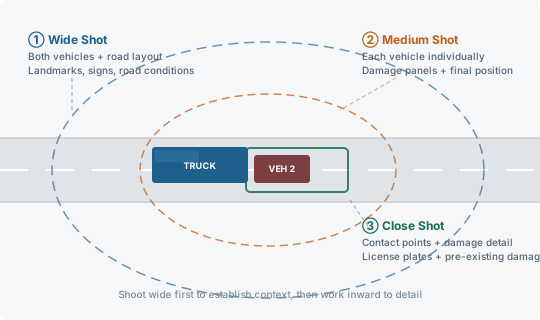
Start from each corner of the scene — all four quadrants if you can safely access them — with wide shots showing both vehicles, the road layout, and fixed landmarks. These establish where everything was before anything moves.
Then medium shots of each vehicle: damage panels, position relative to lane markings or curbs, any deployed safety equipment. Finally, close shots: specific impact points, contact surfaces, license plates, and any pre-existing damage you want distinguished from today's incident.
What to photograph at the scene
Both vehicles from multiple angles before either is moved. All damage on each vehicle, including pre-existing damage you want on record. Skid marks, gouge marks, or fluid spills on the road. Traffic signs, signals, and lane markings visible from the point of impact. Weather and lighting conditions as they actually appear.
The other driver's license, registration, and insurance card — photograph rather than copy by hand to reduce transcription errors. Cargo condition if a cargo claim is possible. The police officer's badge if they respond.
Photographing the road environment
Sight lines matter in reconstruction. Photograph the view approaching the point of impact — what was visible and from what distance. A faded stop sign, an obscured signal, or a blind approach behind a parked truck can be relevant context for how the incident unfolded.
Lane markings at the point of impact deserve their own shots: worn paint, fresh paint, temporary construction striping, or missing markings all affect how the scene is read later. Capture what is actually visible at the time, not a general view of the road.
After the scene and at the shop
If the truck is towed, visit the tow yard before any parts are removed. Some yards disassemble vehicles for storage convenience before the owner is aware. Photograph the vehicle's condition on arrival and compare it to your scene photographs.
At the repair shop, photograph teardown damage before it is repaired and parts are discarded. Structural damage not visible from the exterior, bent frame components, and displaced mechanical parts are all relevant to a complete damage assessment and may support a supplement claim.
Step-by-step checklist
- Check for injuries and call emergency services when needed.
- Move only when it is safe and lawful to do so.
- Collect driver, carrier, vehicle, witness, police, cargo, and insurance details.
- Take wide, medium, and close photos before conditions change.
- Preserve notes, photos, video, and documents under company policy.
Evidence Handling
Preserve original files whenever possible. Record where each file came from, who handled it, and when it was shared.
Do not delete, modify, trim, or overwrite evidence because it seems unhelpful. Follow company policy, insurer instructions, and any legal hold process.
Legal Boundary
This is general information only. It is not legal advice and does not tell you how to handle a claim, lawsuit, investigation, subpoena, legal hold, or evidence dispute.
Rules and duties can vary by jurisdiction, company policy, contract, and facts. Ask a qualified professional when a decision could affect a driver, claim, or case.
Source Notes
- 49 CFR 390.15: Assistance in Investigations and Accident RegistereCFR · official · last checked 2026-06-08Supports: accident-recordkeeping, incident-documentation, internal-review
Supports general accident register and recordkeeping context. Readers must check current rule text.
- Motor Carrier Safety PlannerFMCSA · official · last checked 2026-06-08Supports: safety-management, driver-policy, documentation
General carrier safety management and recordkeeping reference.
- 49 CFR 392.22: Emergency Signals; Stopped Commercial Motor VehicleseCFR · official · last checked 2026-06-08Supports: roadside-incident, emergency-warning, driver-safety
Rule-text reference for stopped CMV warning context. Readers should check current text and company policy.
- 49 CFR 393.95: Emergency Equipment on All Power UnitseCFR · official · last checked 2026-06-08Supports: roadside-incident, emergency-equipment, pre-trip-context
Supports general references to emergency equipment. Pages do not restate detailed equipment requirements.
For source notes and related resources, visit https://www.crashprooftruck.com