
Key Takeaways
- Driver-facing cameras record employees at work. Drivers should know the camera is there, what it records, and who reviews it — before they operate the vehicle.
- A privacy policy for driver-facing cameras should describe access controls, retention periods, and who can request footage. 'We have cameras' is not a privacy policy.
- State law on workplace monitoring varies. A policy that works in one jurisdiction may not satisfy requirements in another.
Related documentation steps
Dash cam handling usually connects to retention policy, claim evidence, privacy controls, and potential litigation — especially when footage may be requested later.
footage retention policy · video in insurance claims · driver-facing camera privacy · dash cam footage in civil litigation
What driver-facing cameras record
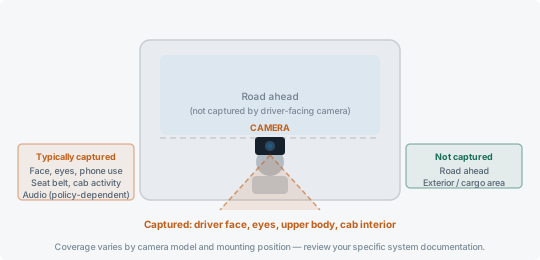
An inward camera aimed at the driver or cab captures driver behavior during the recording window: eye position, hand placement, seat belt status, phone use, eating, and other in-cab activity. On event-triggered systems, this footage is stored when a trigger fires — hard braking, lane departure, impact detection, or manual activation.
Some systems record continuously and retain only triggered clips. Others maintain a short rolling buffer. What is retained and for how long depends on system configuration and the fleet's retention policy.
Notice and acknowledgment
Drivers should be informed of the presence of a driver-facing camera before operating the vehicle. This is a basic professional expectation and, depending on jurisdiction, may have a legal dimension. A driver who discovers a camera they weren't told about will reasonably question what else wasn't disclosed.
Written acknowledgment — signed and dated before first operation — is the standard documentation practice. The acknowledgment should describe the camera, what it records, who reviews it, and under what circumstances.
Access controls and who reviews footage
Define in writing who has access to driver-facing footage: which roles, under what circumstances, and who can authorize exceptions. Broad access — 'anyone in the company can view it' — is both a privacy concern and a coaching program problem. Footage reviewed inconsistently loses its value as a safety tool.
Prohibit informal sharing outside defined channels. If footage is sent to an insurer or attorney, document who received it, in what format, and on what date.
Retention and data handling
The written retention policy should specify how long driver-facing event clips are kept, what happens after the retention period, and what triggers an extended hold — active claim, legal notice, ongoing investigation.
Driver-facing footage that captures personal behavior in the cab is sensitive data. Handle it with the same access controls as any other employee record. The FTC's guidance on protecting personal information offers general data handling principles applicable to small businesses.
Step-by-step checklist
- Preserve the original video file before sharing copies.
- Record camera name, vehicle number, date, time, and time zone.
- Save related telematics or event-trigger details when available.
- Notify the company contact, insurer, or claims contact under policy.
- Avoid editing, trimming, deleting, or overwriting footage.
Privacy and Evidence Handling
Driver-facing camera and safety video policies should be clear about notice, access, review purpose, retention, and who can see recordings.
Privacy rules and workplace policies vary. Preserve original files, limit access, and route questions to the responsible company or qualified professional.
Legal Boundary
This is general information only. It is not legal advice and does not tell you how to handle a claim, lawsuit, investigation, subpoena, legal hold, or evidence dispute.
Rules and duties can vary by jurisdiction, company policy, contract, and facts. Ask a qualified professional when a decision could affect a driver, claim, or case.
Source Notes
- Protecting Personal Information: A Guide for BusinessFTC · official · last checked 2026-06-08Supports: privacy, access-control, driver-facing-camera
General privacy and data handling reference. It is not trucking-specific legal advice.
- Motor Carrier Safety PlannerFMCSA · official · last checked 2026-06-08Supports: safety-management, driver-policy, documentation
General carrier safety management and recordkeeping reference.
- Roadway SafetyNational Safety Council · industry · last checked 2026-06-08Supports: driver-safety, coaching, incident-prevention
Industry safety reference for driver coaching and incident prevention language.
For source notes and related resources, visit https://www.crashprooftruck.com